Course Overview
ARED 2110S: Critical and Contemporary Educational Issues explores the social, cultural, political, and ethical factors that shape contemporary education. Through critical inquiry, reflection, discussion, and hands-on field experience, students develop their identities, philosophies, and professional responsibilities as future educators.
Contemporary Issues in Education
Diversity, Equity, and Inclusion
Ethics and Professional Responsibility
Teaching Philosophy and Field Experience
ARED 2110S
Five Guiding Principles for Teaching
01
Art Is Not Like Any Other Subject.
Art requires hands-on learning, emotional connection and wholehearted participation. It cannot be learned through readings or flipped learning alone. Art is dynamic and can shape how learners view, approach and absorb every other subject. Its power comes from the lasting connection people feel when they encounter art.
In practice: studio time, discussion and making are central to every lesson.
02
Everybody Is an Artist.
Every child has the potential to be an artist. Artistic ability is not measured by realistic drawing, technical skill or perfect composition. When students believe they are bad at art, they may shut down. My role is to build confidence, reframe art as natural and living within everyone, and bring out each student’s artist.
In practice: students are invited to explore imperfect ideas without labeling themselves as good or bad at art.
03
It Is Not the Destination, but the Journey.
The finished product tells only part of the story. Students learn through mistakes, risks, discoveries, emotional changes and decisions made during the artistic process. I pay attention to that growth because the most important product is an artistic mindset students can carry into every subject and throughout life.
In practice: process journals, revision and reflection matter as much as the final piece.
04
Teach Without Taking Over.
Teachers should provide the tools, skills, resources, encouragement and guidance students need, while leaving creative decisions to the students. I will support autonomy, intervene strategically when needed and create assignments that make successful learning possible. The goal is to build artistic agency, not to make the work for students.
In practice: I demonstrate skills, then step back so students can make their own creative choices.
05
Teach to the Individual.
Every class includes learners with different interests, abilities, backgrounds and learning styles. I will build relationships, design accessible lessons and connect activities to students’ interests so they feel comfortable taking risks. I am not only teaching techniques; I am teaching people through art.
In practice: I learn who my students are and adapt instruction so each learner can participate and grow.
Teaching Philosophy
I believe that art is a very special subject, requiring active participation, emotional connection, and a willingness to explore. At the heart of my teaching philosophy is the belief that everybody is an artist, regardless of their technical abilities. I really value the artistic process over the finished product, and recognize that meaningful learning only occurs through experimentation, discovery, and even failure. As an educator, I believe my role is to guide without taking over, providing students with the skills, and confidence to make their own creative decisions. I believe in teaching to the individual and creating an environment that embraces each student's unique experiences, backgrounds, interests, and abilities. Ultimately, my goal is not just to teach students how to make art, but to nurture the artist that already exists within each of them and encourage a creative mindset that extends far beyond the classroom.
Teaching Plan
Lesson Introduction & Context
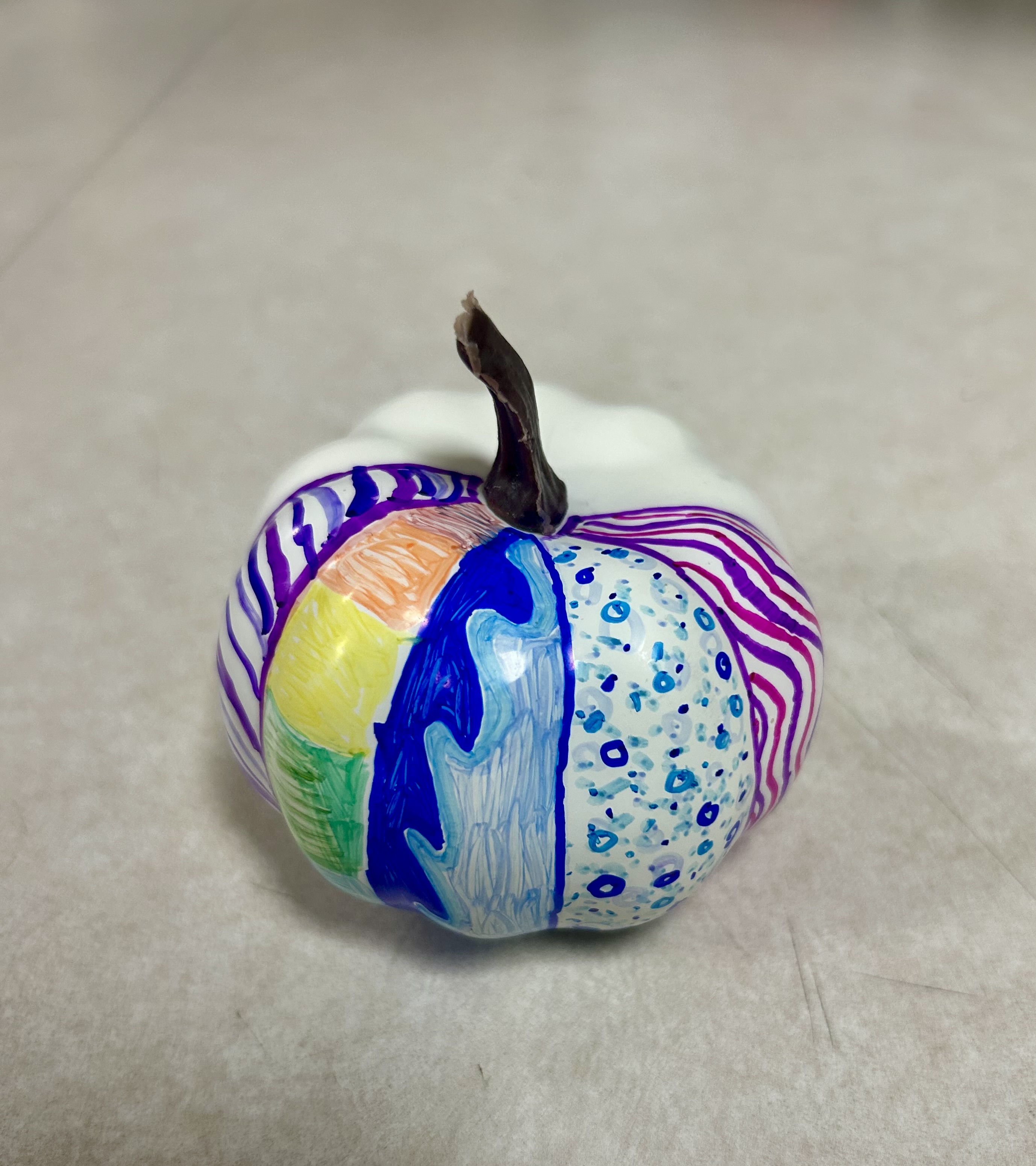
In this lesson, students explore the use of pattern, repetition, and variation through the artwork of contemporary Japanese artist Yayoi Kusama. Students look at examples of Kusama’s pumpkin sculptures and identify how she uses repeated shapes, dots, lines, and colors to create visually intriguing compositions. After learning about these ideas, students decorate their own miniature white pumpkins inspired by Kusama’s work. Students are encouraged to experiment with shapes, colors, and pattern arrangements.
Learning Goals
Students will know:
-
Who Yayoi Kusama is and how she incorporates patterns into her art.
-
How repetition and variation contribute to the creation of patterns.
-
How patterns can be used to decorate and transform three-dimensional objects
Students will be able to:
-
Find and identify examples of repetition and variation in artworks.
-
Experiment with varying and repeating shapes, lines, and colors.
-
Apply their understanding of pattern to make and original pumpkin design.
Materials, Procedures & Assessment
Miniature white pumpkins (one per student), Sharpies, paper towels, and a presentation. Before students arrive, the teacher organizes the pumpkins and decorating materials, prepares the presentation, arranges tables for comfortable work, and prepares examples of pattern and repetition. Materials are distributed after instruction.
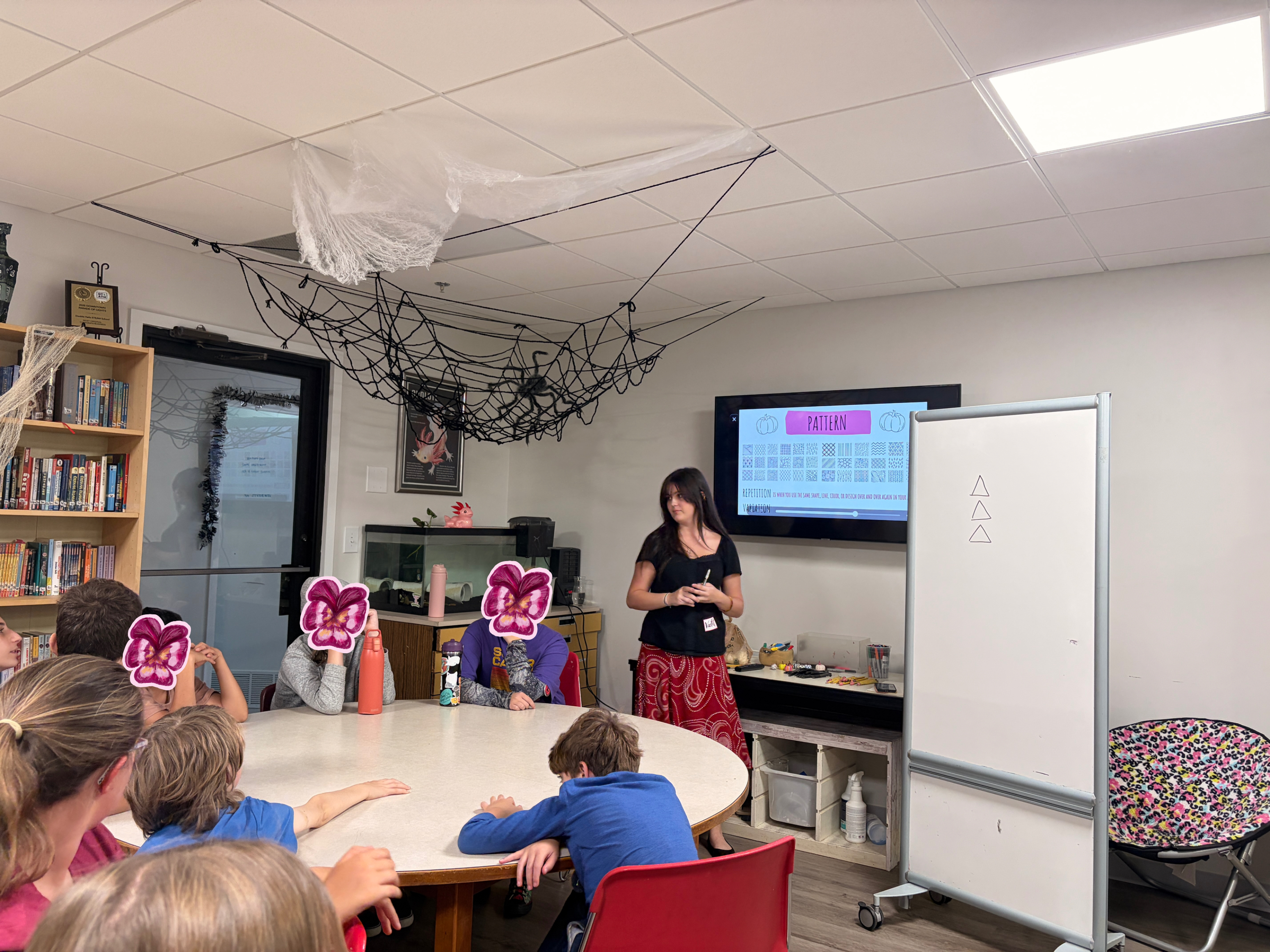
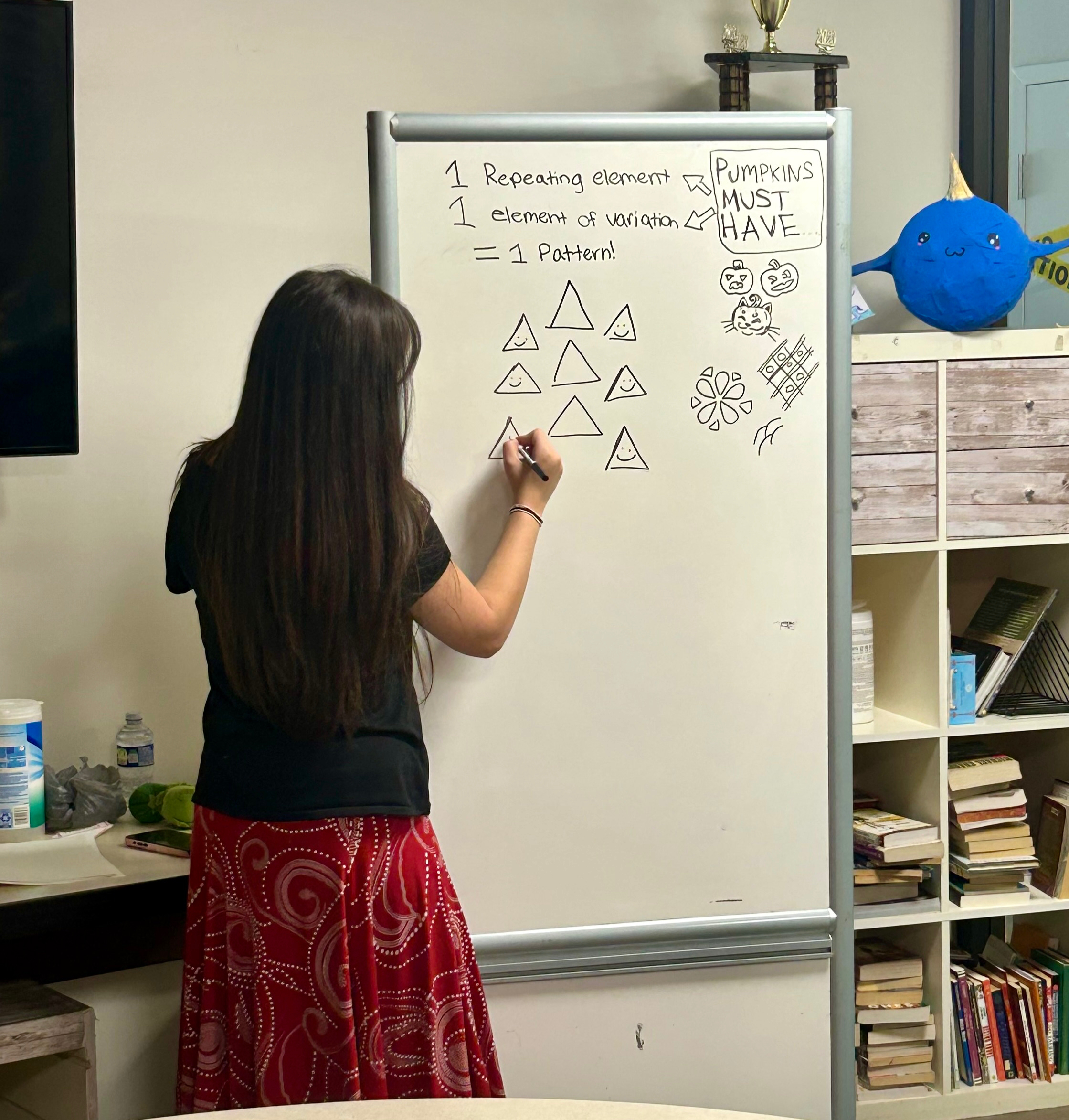
The lesson begins with a brief welcome and attention grabber. Students then learn about Yayoi Kusama through pumpkin sculptures and discussion. The teacher introduces pattern, repetition, and variation using examples and whiteboard demonstrations. Students receive project instructions and decorate a miniature pumpkin using an original pattern inspired by Kusama. During independent artmaking, teachers circulate, offer guidance, and encourage creative decisions. Students finish by cleaning their work areas.
Student learning is assessed informally through participation, discussion, observation, and artwork. The teacher looks for students’ ability to identify pattern, repetition, and variation; intentionally repeat visual elements; experiment with shapes, colors, and arrangements; explain their choices; and make an original pumpkin design.
Reflection
- This lesson is great for a 45-minute class period. Students have enough time to establish a design and carefully execute it.
- This lesson is also great for a variety of different age ranges. This is a good opportunity to introduce pattern, variety, and repetition to younger age groups, whereas older children are able to focus more on advanced drawing styles while pulling on their knowledge of visual culture.
- Allowing five minutes of sketching/planning time on paper before passing out pumpkins and markers can be beneficial and make for a more productive work time.
- A long class period could allow for a better warm-up or the use of better materials (like paint).
Field Teaching
Field Teaching
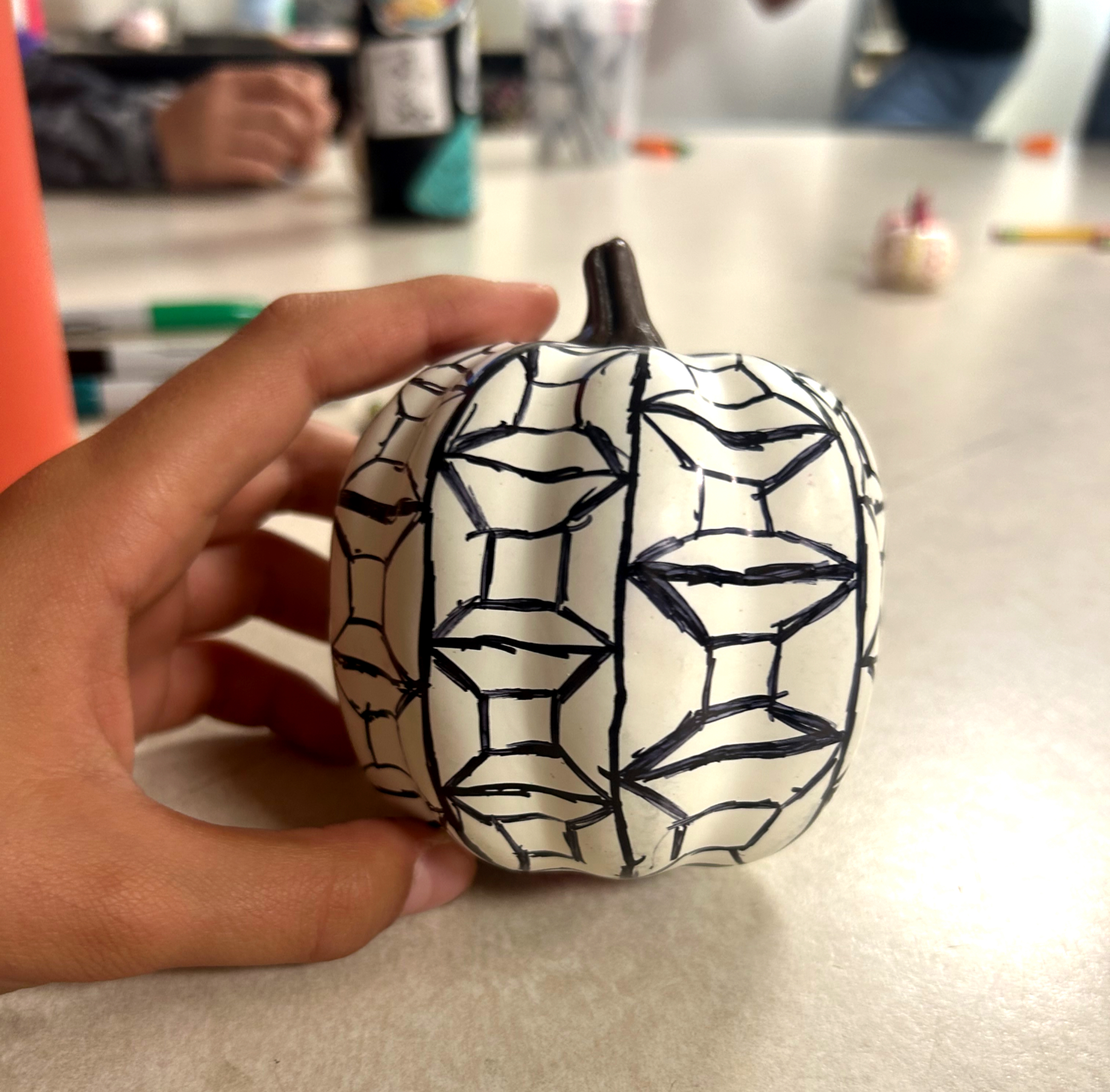
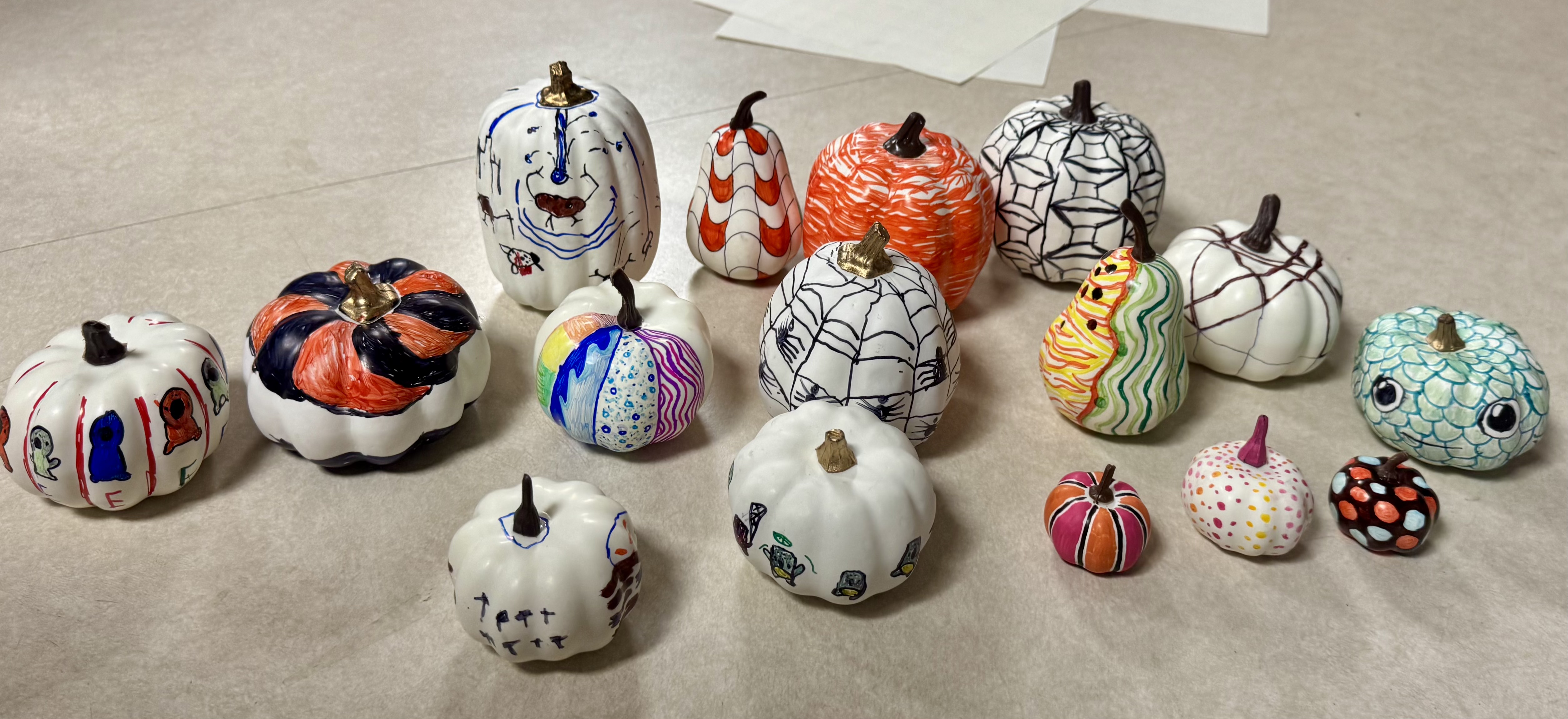
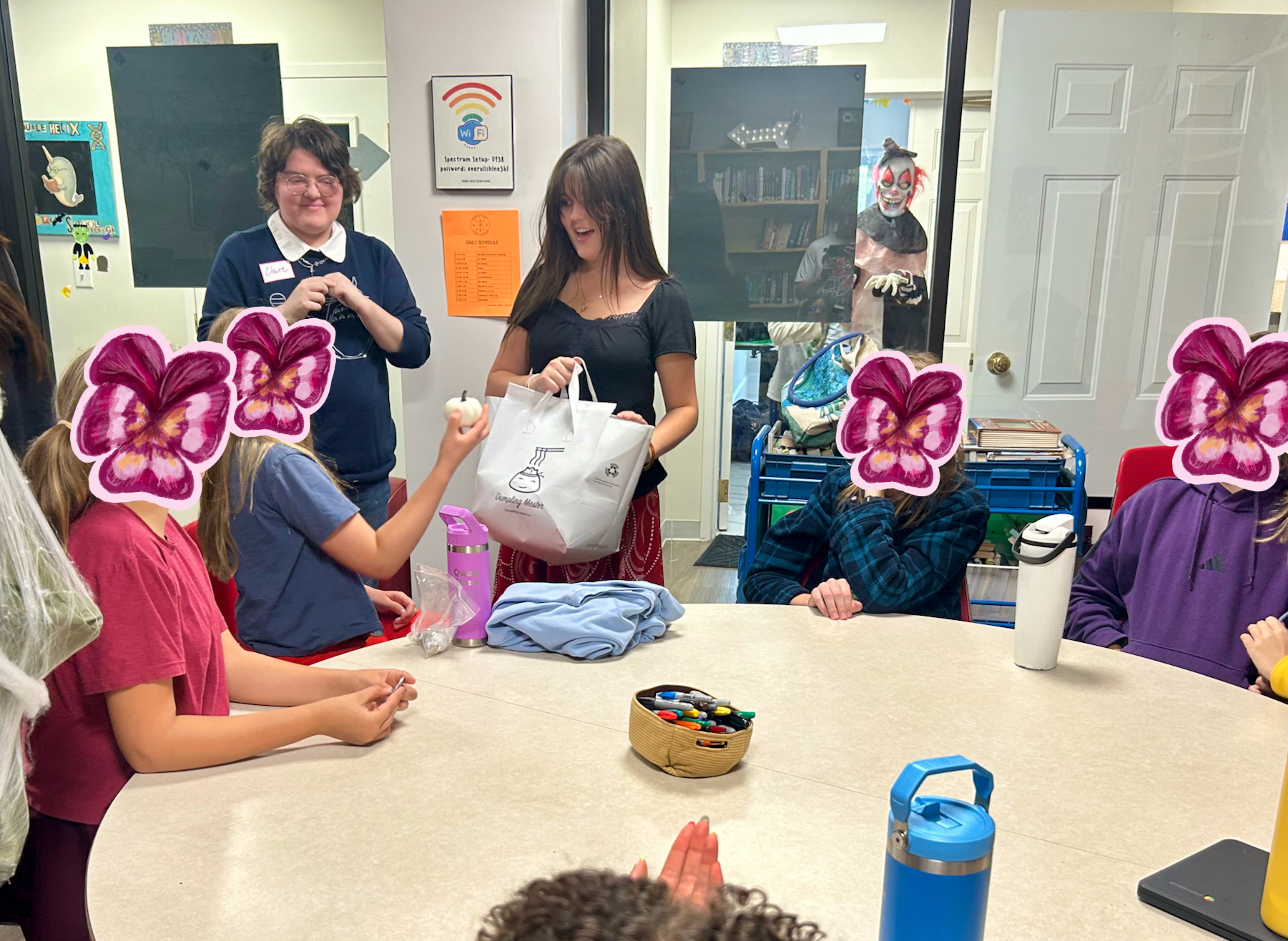
Yayoi Kusama inspired patterned pumpkin lesson. Faces are covered to respect students' privacy.
Student response: finished works shared during a group critique.
Reflection: notes recorded after the lesson to guide future revisions.


Field Reflection
Going into my lesson, I was a little concerned that this activity might be too simple for the older students or too challenging for the younger ones. But I realized that the open-ended nature of this project would allow students to kind of determine their own level of complexity. Teaching art is all about recognizing individual strengths, weaknesses, backgrounds, and interests. Rather than having to tailor my assignment for each kid, we had a common objective that could be achieved in a number of different ways. The younger students were able to experiment with pattern. They gained a better understanding of variety, repetition, and color combinations. The older students were able to use their existing knowledge of color, pattern, and art in general to take their designs to the next level, and everyone created something they were proud of.
After this experience, I feel a little more conscious of how I communicate artistic ideas and concepts to younger audiences. As an art student myself, I often use my past experiences to gauge the knowledge of my own students. For example, my lesson centered on artist Yayoi Kusama, someone I wasn’t introduced to until high school. I based my lesson on the assumption that most students wouldn’t be familiar with her. Much to my surprise, five minutes into my lesson, one the youngest children in the class exclaimed that he loved her work. This helped me realize that it is important not to assume anything about what they know. It is better to ask questions and check for understanding. We had limited time, so knowing that the kids were already relatively familiar with the artist would’ve allowed me to spend that time going deeper into the concepts.
This lesson reinforced what I already knew about materials and classroom management. We found out pretty quickly that it is best to keep materials away from
our students until instruction is finished. They often get ahead of themselves and want to start on their project before we’re ready to begin. Passing out pumpkins and markers after the lesson proved to be very successful. We also incorporated some callbacks and attention grabbers to keep students on task. I introduced these at the beginning of my lesson so that the kids could familiarize themselves. Since this activity was pretty simple, we did have issues with kids getting off task. Going forward, stronger classroom management will be important. I believe that with greater incentives, like an informal critique or participation grade, students will focus better.
During this lesson, there were a couple moments when we had to quickly pivot. Many students finished their pumpkin with extra time. Luckily, I anticipated this and brought extra mini pumpkins for students to work on. If I were to teach this lesson again, I would be more intentional about adding in a moment of reflection. We went around and asked students to tell us about their patterns, but I think a slightly more formal opportunity to share with the class would’ve been better. It would familiarize students with sharing their work, build confidence, and provide another incentive to follow the assignment.
All in all, I am pleased with the outcome of this lesson. The students learned about contemporary artists, pattern, form, color, and more. Most importantly, they created something they were proud of and had an opportunity to improve their confidence as an artist. This experience helped me understand just how important an inclusive and engaging lesson is. As a future educator, I want my students to leave my classroom feeling engaged and inspired, and like they have a better understanding not only of art, but of themselves.